Why can an animal with an excellent performance index fail to transmit the expected superiority to its offspring? Dr Japie van der Westhuizen revisits the fundamental differences between traditional performance ratios and BLUP breeding values. He explains how contemporary-group variation, environmental effects, pedigree relationships and maternal influences can bias traditional indices, while BLUP incorporates multiple sources of information to estimate genetic merit more accurately. The article also explores genomic information and economic selection indices, including Logix Cow Value, Growth Value and Production Value, as tools for selecting more profitable livestock.
Download this publication
PDF · 409 KB · 2 downloads
From the document
BLUP breeding values and traditional indices: A R EVI S I T
DR JAPIE VAN DER WESTHUIZEN
SA STUD BOOK AND ANIMAL IMPROVEMENT ASSOCIATION
BLUP breeding values (also called EBVs, EPDs, ETAs or
he use of BLUP breeding values
otherwise), the more accurate predictions of genetic
as a means of comparing the
merit, resulted from the initial theoretical developments
genetic merit of livestock
of Professor Charles Henderson at Cornell University. Due to constraints in computing power, initial genetic
became common practice in
merit predictions were based on Sire models and
animal breeding globally.
mainly applied in dairy populations. As the abilities of computers exploded (in terms of memory expansion,
Traditionally, especially for beef cattle (but also small stock
and to a lesser degree for dairy cattle), individual animals
alternative algorithms developed to deal with large
were compared based on their own performances within
matrices, model development and application lead to
their contemporary (test) groups. The performance of
more accurate predictions of genetic merit for possible
each individual was then compared to the group mean
breeding animals. Current practices are usually based on so-called “Animal Models”, taking all relationships and
and expressed as a “ratio”. The resultant calculation is
measurements into consideration.
also usually multiplied by 100.
BLUP breeding values basically address the serious
In South Africa this ratio, expressed relative to 100, is
shortcomings in the prediction of genetic merit of
popularly called an INDEX. To equalise the “playing
animals considered as replacements or to be culled.
field”, pre-corrections are usually made for the age of
Indices only consider performance within their own
the animal and the age (and sometimes parity) of the
comparison groups but do not account for the most
dam of the animal (for maternally influenced traits, such
important question, namely: “will these differences in
as weaning weight). Comparison groups are usually
measured performance result in similar values in the
separated for different sexes.
offspring and other circumstances?”
In many cases, Breeders’ Societies set subminimum
Furthermore, the question also remains if these
values on the eligibility of animals to be considered as
differences in performances result in the superiority (or
breeding contenders, based on these Indices.
inferiority) of the sire or the dam of individuals.
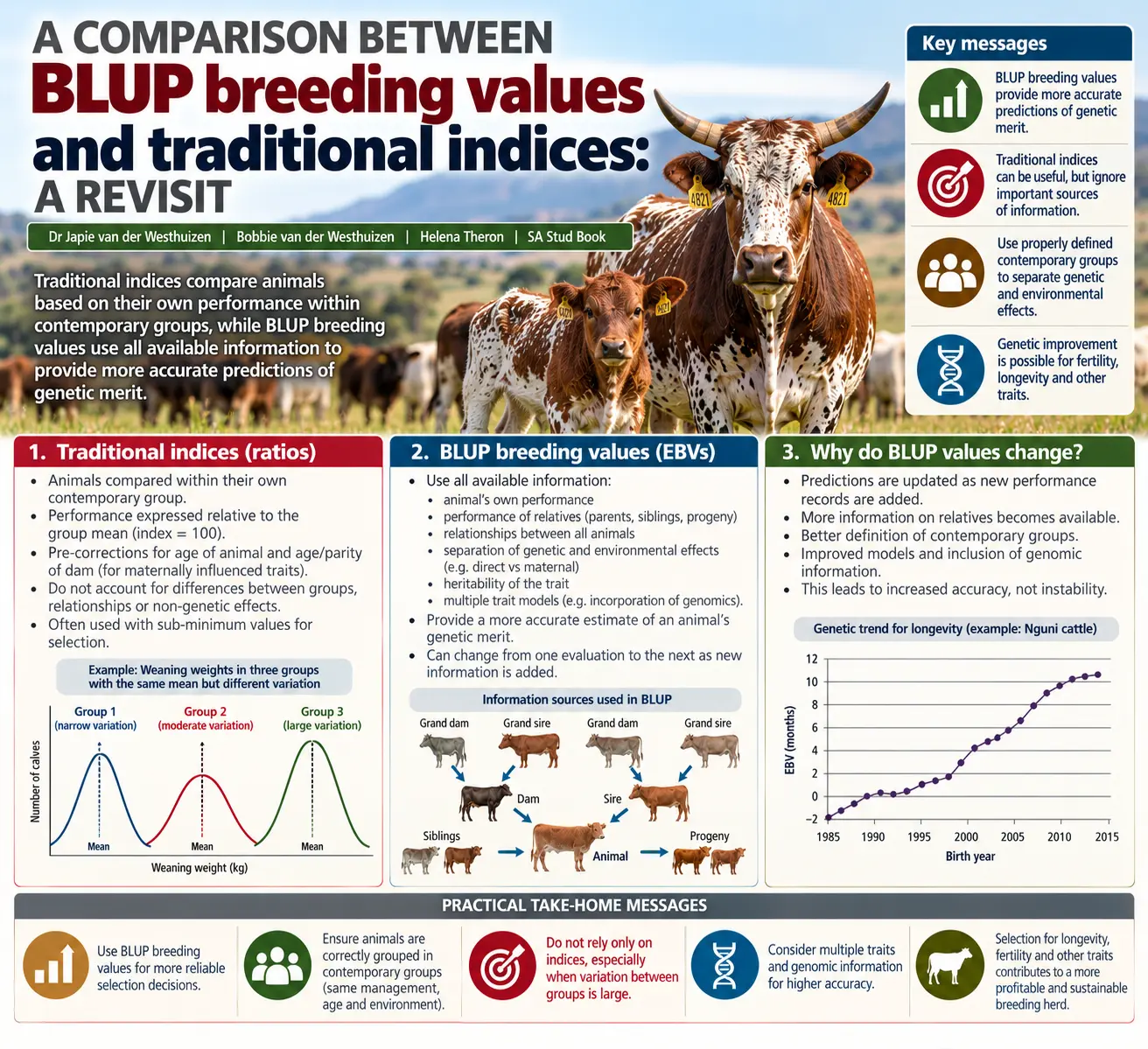
Figure 1 depicts the expected differences in the ranges of indices in three groups of calves recorded for weaning weight. Differences
The opening of the PDF. Download it above for the full document.