Balanced view on Epigenetics in Livestock
Download this publication
PDF · 1.5 MB · 53 downloads
From the document
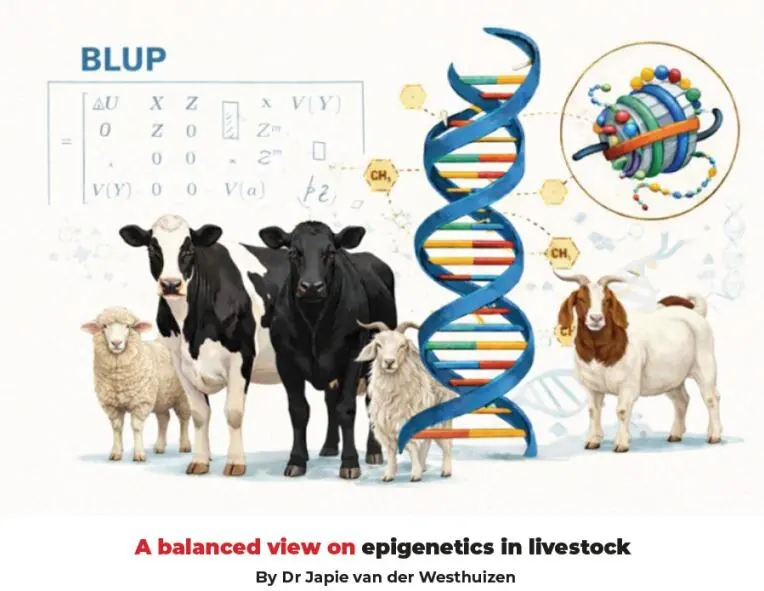
A balanced view on epigenetics in livestock By Dr Japie van der Westhuizen Epigenetics has become a buzzword in animal science, but it is often misunderstood. While the mechanisms are complex, the practical message is simple: Epigenetics influences how genes are expressed – not simply which genes animals carry. For breeders, this distinction is crucial. What is important and will be shown is that the traditional and genomic BLUP systems already handle most (if not all) epigenetic effects exceptionally well, maintaining genetic accuracy. This is the case, even when environmental conditions distort an animal’s phenotype (performance, reproduction or any other trait and expression). What is epigenetics? Epigenetics describes any changes in how genes are ‘switched on or off’ without changing the DNA sequence (the coding in the genome for genetic potential) itself.
These switches respond, to varying degrees, to environmental factors such as: • Maternal nutrition. • Stress. • Environmental high temperature (and other climatic stressors). • Disease exposure. • Intake of toxins and mycotoxins. • Mineral deficiencies. • Colostrum transfer. • Pasture quality. Epigenetic changes are therefore particularly active during pregnancy (foetal programming) when organs, wool follicles, muscle fibres, and the immune system are formed. It is a critically important and often overlooked aspect in the management of pregnant females and its influence on the future performance of their offspring and even that of their grand progeny where the foetuses were female.
Why epigenetics matters Epigenetics helps explain why two animals with similar genetics might perform differently when raised under different maternal or environmental conditions. Examples supported by research include:
Beef ca le Gestational nutrition affects muscle fibre formation, immunity, fertility and carcass traits. Creep-feeding and/or earlylife supplementation changes muscle methylation and improves weaning weight and marbling. Studies show that maternal stressors leave epigenetic marks in the foetus that later influence growth, immunity and resilience, this is linked to prenatal stressors, including thermal (heat) and undernutrition.
Dairy ca le Heat stress in late gestation permanently reduces a daughter’s milk yield and immunity. Studies show that dietary components such as methionine, lysine, choline, folate, and other micronutrients influence DNA methylation patterns that affect mammary gland gene expression and milk yield. Maternal nutrition during gestation and lactation can permanently alter epigenetic marks in offspring affecting milk production and composition later in life. Optimising nutrients that serve as methyl donors (e.g., methionine) has been associated with changes in offspring gene expression favouring …
The opening of the PDF. Download it above for the full document.